



















News
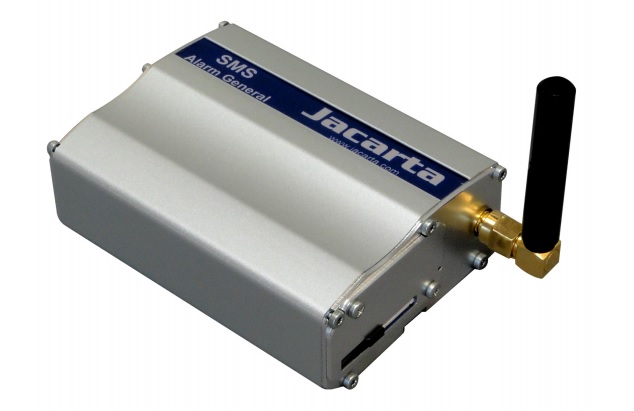
We all believe (and hope) that ‘it won’t happen to us’ but how many horror stories of you heard where an unnoticed leak has turned into a flood, a briefly un-manned room has resulted in theft, or a faulty piece of equipment has led to ruined stock, lost data or hardware? SMS Alarm General is an extremely cost-effective way of helping to prevent these initially minor events becoming catastrophic for you or your business.
Up to 2 x Go-Probe sensors and 1 x Temperature sensor can be monitored by the Alarm General and it is also possible to link the Alarm General to alarm panels such as fire, security, generator, UPS, fire suppression, air-conditioning, etc. SMS Alarm General can be used to help protect all types of premises: Offices, data centres, shops, warehouses, industrial units, homes, holiday villas – the list is endless!
How Does SMS Alarm General Work?
The SMS Alarm General solution consists of a quad-band modem, integrated Jacarta configuration and alerting software module, and the capacity to connect up to 2 x Go-Probe sensors and 1 x Temperature sensor. Once a user-supplied SIM card is inserted and the sensors connected, configuration of alarm messages and contact telephone numbers can be carried out by sending text messages to the Alarm General. The Alarm General will reply to acknowledge each of the messages, confirming that the required instruction has been carried out.
Once configured, SMS Alarm General will continually monitor the condition of the sensors and alert the configured mobile phone numbers when an alarm condition is detected. Up to 5 numbers can be alerted. In addition to the alerts, Alarm General can send you a daily status text, and you can remotely check the status of your sensors at any time by sending a text message to the Alarm General.
You can download the brochure here.
Jan
This joint solution provides a highly efficient, scalable and effective network-based platform for service providers and enterprise networks. In turn, they can deliver increased levels of security to their consumer, business and internal customers without any need for end-device software or new network elements. Utilizing DNS, a lightweight, multi-network, multi-end device protocol, this solution is available for both fixed (xDSL, Cable, NBN) and wireless networks offering protection for PCs, tablets, smartphones, wireless dongles, games consoles, and any IP- enabled device.
“Sophos provides threat intelligence feeds to our network, gateway and endpoint security products. Our partnership with Nominum extends this intelligence to the DNS level, offering security in the core operations of the network,” said Stuart Fisher, Managing Director, Sophos APAC. “SophosLabs identifies more than 30,000 new malicious URLs daily. By adding intelligence from the DNS into the equation, the joint Nominum–Sophos solution offers maximum protection for all network users.”
“Both our companies are highly committed to making the Internet a safer, more secure place for users. Considering the value this partnership will bring into our core markets such as Australia, New Zealand, Singapore, ASEAN, China and India, we anticipate we will see a high-level of adoption.”
“By joining our partner ecosystem, Sophos and Nominum can provide increased protection to Internet users across multiple platforms,” said Brian McElroy, Vice President of Business Development, Nominum. “A joint Nominum-Sophos security solution offers near real-time (zero day) in-network protection, like the Interpol-fed Nominum Content Blocking solution deployed in Australian carrier networks, which protects Internet users from child sexual exploitation content. Adding this new policy and protection in-network from malicious threats makes great sense.”
Jan
SC Magazine’s July 2014 review calls Sophos Mobile Control 4.0 (SMC) a “solid, quality enterprise-capable product,” and notes that SMC is “easy to deploy and manage with a vast set of features.”
This award shouldn’t be too surprising — SMC version 3.5 also received five stars from SC Magazine. And we’ve been recognized as a Visionary in the Gartner Magic Quadrant for Enterprise Mobility Management.
Here are some other highlights from the SC Magazine review:
1. SMC supports BYOD initiatives with its self-service portal, so users can “handle most of the help desk activities themselves if admins choose this path.”
2. “Configuration, user provisioning and device enrollment took only minutes.”
3. “The dashboard was feature-rich and easy to navigate.”
4. “One of the features of note was the integration of the anti-virus and protection solution well known to Sophos customers.”
5. Support documentation provided “excellent information for each feature of the product” that were “clear and easy to understand.”
6. “Value for money is good.”
Sophos is a Visionary in Enterprise Mobility Management
Gartner’s Magic Quadrant for Enterprise Mobility Management Suites 2014 recognizes Sophos in the Visionary Quadrant. Find out what Gartner has to say about Sophos and SMC in the free Magic Quadrant report.
Learn more about Sophos Mobile Control
SMC 4.0 takes data protection beyond the office door by ensuring persistent mobile encryption on devices. Additional network access control based on device compliance status makes mobile device management, content management and mobile security simple and effective.
Available on premise or as a service, SMC provides a simple and differentiated approach for small and mid-market organizations to manage and secure mobile devices, content and applications. Watch the video for a quick overview of Sophos Mobile Control, or sign up for a free trial to see for yourself why SMC is the best EMM product for businesses of any size.
You can read the original article, here.
The survey was organised by the University of Kent’s Interdisciplinary Research Centre in Cyber Security, by a team composed of both computer scientists and psychologists, and conducted using Google’s Consumer Surveys platform. As the authors of the report caution their readers, the survey covered a relatively small number of people – just over 1,500 UK adults. That leaves it open to inaccuracies for all sorts of reasons, including sampling bias due to the kinds of people drawn to responding to online surveys, but the results seem dramatic enough to be more than just an anomaly. Other data picked up by the survey seems fairly predictable. Around two-thirds of us feel at risk from cybercrime, just over 1 in 4 have been the victim of some sort of “cyber-dependent crime” in the last year, with malware (11.9%) and phishing (7.3%) the main culprits. 1 in 10 has been exposed to online bullying, harassment or stalking.
If the rate of malware infections seems a little higher than we normally see in surveys of this nature, that could well be down to the high levels of CryptoLocker and other ransomware included in those figures. 9.7% of people claimed they had been infected by ransomware of some kind, with CryptoLocker specifically named in the survey question and making up around a third of all reported infections.
Survey data always has a problem in that it’s only as accurate as the knowledge (and honesty) of the people being surveyed. Malware, for the most part, aims to avoid revealing its presence to its victims, sometimes going to great lengths to do so. So when you ask someone if they have ever been hit by malware, and their response is a strong and definite “no”, that answer should always be viewed sceptically. How can they possibly know? Proving a negative is not easy in the best of circumstances, and being certain something hasn’t happened simply because you haven’t noticed it happen is particularly difficult when the thing you haven’t noticed is specifically designed to be secretive and stealthy. Have you ever been spied on from a distant rooftop? No? Can you really be sure of that?
Unlike most malware though, CryptoLocker and other ransomware attacks make no secret of their presence, indeed their main intention is to make it very plain to their victims that they have been infected. So it could be that what we’re seeing here is not a change in the total level of malware going around, simply a change in the visibility of it to the general public.
Only a third have firewalls, and perhaps that is no bad thing. Other details emerging from this same survey include less than half of respondents using up-to-date anti-malware, just over a third implementing firewalls, and a little less than that exercising sensible password hygiene. Maybe a little more visibility will finally make the general public start sitting up and paying more attention to the risks of malware and other online threats. At the moment, it seems like we’re still mostly either ignorant or in denial, right up until something nasty infects our machine and nabs our data, or encrypts it and demands a ransom. That so many people pay up is not much of a surprise either. Like other security basics, it looks like proper backing up of sensitive or precious files is a rare thing.
Victims forced to pay up include police departments and law firms, with ransomware threats clearly targeting small businesses where proper security practices such as backups are more likely to be lacking. These shortcomings may have been hidden in the past, but now they are being forced into the spotlight, and the shock may just jolt people into giving the right priority to their security needs.
Here are five “top tips” for keeping safe against malware in general, and cyberblackmailers in particular:
- Keep regular backups of your important files.
- Use an anti-virus, and keep it up to date.
- Keep your operating system and software up to date with patches.
- Review the access control settings on any network shares you have.
- Don’t give administrative privileges to your user accounts.
You can read the original article here. More information about CryptoLocker here.
Jan
A new program, dubbed PIN Skimmer by its University of Cambridge creators, can correctly guess a high proportion of PINs using the device’s camera and microphone. When selecting from a test set of 50 4-digit PINs, PIN Skimmer correctly infers more than 30% of PINs after 2 attempts, and more than 50% of PINs after 5 attempts on android-powered Nexus S and Galaxy S3 phones. When selecting from a set of 200 8-digit PINs, PIN Skimmer correctly infers about 45% of the PINs after 5 attempts and 60% after 10 attempts. The university team discovered that PIN Skimmer could identify PIN codes entered on number-only softpads by using the camera on the device to monitor the user’s eye movements as they enter their code. Also, the microphone could be used to detect “touch events” – the clicking sound made as the user enters their PIN on the touch screen.
The paper, written in order to raise awareness of side-channel attacks on smartphones, took the approach that the device had already been infected with malware that was then attempting to snaffle the PIN. The university team then set out to see how effective an attack could be and, also, how PIN length may affect the likelihood that the code could be correctly guessed. Mimicking a typical piece of malware, stealth was a key feature in the design. The researchers ran image processing algorithms remotely to minimise battery drain, something that could alert the user that an unauthorised program was running.
An API exposed by the Android operating system was used to disable the LED that switches on in some handsets when the camera is in use. Photos and video taken by PIN Skimmer were saved to the phone but the file sizes were limited to 2.5MB to reduce detection. A real piece of malware could likely hide such files from view completely. Likewise, the research team hypothesised that the sending of data back to the remote server could also be hidden from the user.
Additional network charges is another problem connected with transmitting data. Many smartphone users are on tariffs that charge them additional fees should they use more than a pre-determined amount of data within any monthly period. To that end the report suggested that a real-life Trojan would probably report back to its control centre only when it detected a free WiFi connection within range. The researchers discovered that, contrary to what you may have expected, longer PINs were actually easier to crack than shorter ones. This unexpected result was put down to the fact that longer PINs actually gave the program more information to work with which increased its accuracy.
One of the co-authors of the report, Professor Ross Anderson wrote: Our work shows it’s not enough for your electronic wallet software to grab hold of the screen, the accelerometers and the gyro; you’d better lock down the video camera, and the still camera too while you’re at it. (Our attack can use the still camera in burst mode.)
As for mitigating the risks posed by such an attack, Anderson suggested that questions need to be asked as to which resources should remain accessible during PIN entry, though he did note how disabling some functions, i.e. the speakers, could cause extreme problems to the usability of the device: For instance when a call comes in, the user needs to hear the ring tone while unlocking his phone; otherwise he may assume the caller has hung up.
Instead, he suggests that whitelists may be the answer – denying use of all resources during PIN entry, unless explicitly authorised. Another option, according to Anderson, would be a more widespread adoption of biometrics in smartphones but that is not without its own issues.
You can read the original article here.
Jan
Some recent industry estimates report that as many as 96 percent of organizations now have employees who use both corporate-managed and personal mobile devices for work purposes, forcing IT to adopt new strategies to protect their data on those devices. Even though huge numbers of smartphones and tablets are lost every day, many users don’t enable even basic password protection.
Mobile malware and hacking is on the rise and many workers are still using unsecured personal mobile devices to access corporate data—a major concern for organizations trying to protect data while letting users work how they want.
Sophos Mobile Control provides the complete security that IT requires to confidently embrace employee device mobility. This latest version delivers Windows Phone 8 support alongside iPhone/iPad and Android, with self-enrollment and self-service capabilities for users, and allows IT to manage the complete device lifecycle as well as loss & theft scenarios.
Also included is an easy-to-use client app, which provides access to compliance status, messages and support information—allowing for comprehensive reporting and giving IT a holistic view of devices. Simpler administration is delivered by an updated menu, dashboard and various other workflow improvements. The SaaS version of Sophos Mobile Control 3.5 delivers better integration into corporate IT with a new remote Exchange ActiveSync (EAS) Proxy that enables organizations to block non-compliant devices from receiving email, and remote LDAP support that allows users to easily connect to Active Directory.
You can read the original article, here.
It features user-based management, reporting and licensing; built-in web security to prevent user access to malicious and infected websites, and new policy-based Web Control features to enforce safe and productive web usage. Sophos Cloud is effortless to deploy and easy to use and manage for IT managers and channel partners, given its simple, intuitive user experience.
A recent Sophos survey of IT managers highlighted the growing challenge of device diversity across their organizations, with a need to support Windows PCs, Macs and mobile devices: 78 percent support or plan to support Macs on their corporate networks, and 41 percent see the number of Macs increasing in their corporate environments. A recent IDC study showed that a quarter of SMBs are using mobile device management (MDM) and Sophos is the number one solution. However, 75 percent still have not adopted MDM and with this new release Sophos has made it simpler than ever for those customers to get control of their mobile devices to secure their future. Clearly organizations need an integrated security strategy to support users’ demands to choose their own device (BYOD), while providing IT managers real-time visibility and access to information to keep organizations safe from advanced threats. Sophos Cloud delivers a simple and effective approach for IT organizations to confidently embrace BYOD and to support and protect the wide range of user devices in their environments.
Based on the same proven technology that protects over 100 million devices worldwide, Sophos Cloud is a smart choice for global organizations. It delivers effective mobile device management to keep users productive and corporate information secure. The new web features enable IT managers to easily set and enforce policies for enhanced security and compliance; user-based policies can be created once and rapidly deployed across multiple groups and platforms, and follow the users and their devices even when they are off the network. Sophos Cloud also adds Active Directory synchronization to simplify deployment and management for users and groups.
“IDC predicts that the continuing SMB productivity push will drive cloud and mobility adoption, in a big way; in the U.S., 1/3 of small businesses and almost 3/4 of mid-sized firms are using the cloud, and the share will continue to grow,” reports Raymond Boggs, research vice president at IDC. “Sophos Cloud can help manage security across Windows, Mac, and mobile devices, which is especially important given the diversity – some might say chaos – of an SMB environment. Its user-based management is well suited to SMBs looking to secure users of corporate devices or their own BYOD equipment. Sophos Cloud will be a useful resource for channel partners to leverage in helping support the resource-limited IT teams of their SMB customers.”
“We’re pleased to deliver this new release of Sophos Cloud, as it’s another positive step in our strategy to use the cloud to create new, innovative solutions to the ever-increasing security challenges faced by small and mid-market businesses today,” said Bill Lucchini, vice president and general manager of Sophos Cloud. “Sophos Cloud is a differentiated offering that enables IT professionals to simplify security management without compromising users’ demands for usability and performance. We continue to address the market’s desire for powerful simple-to-use solutions to combat the evolving threat landscape. Sophos security delivered with cloud simplicity is clearly resonating with our customers and partners.”
Sophos Cloud: Ideal for IT Solutions Providers
Consistent with Sophos’ commitment to its channel partners, Sophos Cloud enables IT solution providers and outsourcers to deliver value to customers. A unified web-based management console, hosted in the cloud by Sophos, enables complete protection for users and devices, and a new partner dashboard gives partners visibility into, and control over, their customers’ subscriptions, devices and policies.
Sophos Cloud is currently available. For more information or for a 30-day trial, visit: www.sophos.com/cloud
iMeter can monitor up to 496 of the following sensors from a single IP address:
- Current (Amps) using our unique intelliAmp® current sensor (pictured above)
- Voltage
- Temperature
- Humidity
- Airflow
- Water Leak
- Security (door contact or motion)
- Smoke
The unique combination of the sensors on offer means that IT and Facilities personnel can analyse the relationships between power usage, airflow and temperature to help assist data centre management decisions relating to cost control and reduction. The design of the Jacarta Go-Probe sensors enables the complete system to be implemented with zero downtime. The intelliAmp® current sensor can be clipped to the outside of 16 and 32 Amp power cables to monitor the True RMS current draw of single phase racks without any need to disrupt the power flowing into those racks.

interSeptor iMeter® can either be integrated into SNMP network management systems or, alternatively, Jacarta’s powerful iMS software can be used to monitor, log and report on iMeter sensor activity. The overall iMeter package offers a no-fuss, non-disruptive way of implementing an effective power monitoring solution that can influence and assist data centre efficiency decisions for years to come.


interSeptor iMeter Key Benefits:
- Modular system for easy implementation and budget-matching
- Zero downtime required for installation
- Quickly and easily compare power usage between data centre racks
- Track power efficiency improvements over time
- Use iMeter on-board logs or iMS software to identify where power savings can be made
- Monitor and assess the relationships between temperature, airflow and power usage to improve data centre efficiency
- Solution ensures that, in the unlikely event of sensor failure, there is no disruption to the power supply into your racks
- Integrated environmental and power monitoring ensures alerts can be received quickly to help prevent data centre catastrophe
- An array of additional features such as virtual sensor integration, modbus, SMS and voice alerts (with optional modem), etc. help to ensure that the iMeter can accommodate a broad variety of power and environmental monitoring requirements

You can read the original article here.
Where are business most likely to be vulnerable and how this can be fixed with Sophos products?
SMB Businesses have a limit of both personnel and financial resources. Security therefore must be simple to setup, configure and administer. Many SMB customers don’t have a security team. So we offer MSP and other methods of delivering simple security to customers at a reasonable cost.
What is the philosophy and the goals to which you aspire?
Sophos believes in keeping things and hence security simple. This starts with our UTM and Endpoint Security Products, making the administration and configuration simple. When security solutions are easy to use, our customers have a higher level of security. This is the vision that drives us as a company: Security made simple. We also don’t believe in scaring our customers, they are smart enough to understand the need for security.
Sophos delivers the vision through dedicated employees that have experience in the global security space and a dedicated channel that is continuously updated via technical and sales staff interested in its success. Our dedicated staff, channel, partners and customers are the key to our success. We are all ultimately on the same team!
How do you know that you have spent enough to make your business secure?
Good and tough question, there is no definitive answer here besides implementing as much as we can in a set budget. The more interesting question is, how do we create the security budget. This is where ISO27001/2 come in, creating a risk process that also looks at assessing what data and informational assets we have.
When a company knows what its assets are, then we can begin to assess the risk, vulnerability, exploits and also damages that could result. After this process, we then start to understand how and with which budget we can mitigate those risks.
What we can expect from Sophos cloud in the near future?
We are driven to adding, new and existing functionality into the Sophos cloud, adding features slowly to make sure we follow our vision of simple security. Every new step and verison brings more of the award winning in premise technology into a new delivery system (the cloud).
This doesn’t mean we will stop selling on premises based solutions. We are really excited about where the cloud is going, with great reports and an overall easy and simple administration console that has all the features a customer or partner could need based on our on-premise know-how.
How do you approach the partner landscape in Greece?
We’ve made it simple to partner with us—with a flexible and generous partner program, delivered by dedicated channel relationship managers. And of course in cooperation with motivated distribution partners like NSS in Greece. Even though we work with more than 12,000 partners you’ll feel supported every step of the way. Because we work hard to get to know you and your organization.
When you partner with us, we help you identify opportunities to retain and grow your customer base and increase profits. You’ll be rewarded with deal registration protection, attractive margins, and joint lead generation programs. We also support you with up-to-date training and certification, so your sales and technical teams are fully qualified in our latest solutions. Our approach is unique—we are 100% channel focused. We continuously invest in our partner relationships. And it’s our mission to help your organization flourish.
The research evaluated thousands of website URLs of organizations that utilized the GlobalSign SSL Configuration Checker; many of these organizations were looking to assess the strength and quality of their SSL configurations. Statistics revealed that in the first quarter of 2013 over 6,000 sites used the tool to evaluate the effectiveness of their SSL, and 269 of those sites used the remediation guidance provided by GlobalSign to improve and, in some cases, strengthen the security of their sites within a matter of minutes.
Upon visiting GlobalSign’s SSL Configuration Checker, powered by Qualys SSL Labs, organizations enter their website addresses and instantly receive a letter grade for their configuration. The grading system has three steps. First, the site’s SSL certificate is examined to confirm that it is trusted and valid. If a server fails this step it is automatically given a zero. Next, the server configuration is tested in three categories:
1) protocol support,
2) key exchange support and
3) cipher support.
Finally, a score between 0 and 100 is assigned to the site. The grading scale is as follows:
• score ≥ 80 A
• 65 ≤ score ≤ 79 B
• 50 ≤ score ≤ 64 C
• 35 ≤ score ≤ 49 D
• 20 ≤ score ≤ 34 E
• score
The research revealed that 50 percent of 269 websites that used the GlobalSign SSL Configuration Checker strengthened the effectiveness of their SSL configuration grades in 30 minutes or less. Fifteen percent improved from a B, C, D or F to an A grade in less than two hours.
Notable statistics for the 269 improved websites:
• 172 organizations improved their grade to an A overall – 63%
• 13 organizations improved their F grade to an A, B, or C – 42%
• 95 organizations improved their B grade to an A – 35%
“The improvement in website security is certainly encouraging for us to see, but this is the absolute tip of a very big, fast-moving and dangerous iceberg,” said Ryan Hurst, chief technology officer of GlobalSign. “Administrators can use the SSL Configuration Checker to greatly improve and remediate the security of poorly configured sites, but it is the awareness of this free and easy tool that we are trying to drive. Both small and large organizations with websites must adopt best practices, but first they have to identify the strengths and weaknesses of their sites’ SSL configuration.”
Alexa 100 Sites Evaluated:
In addition to the findings derived from inbound SSL Configuration Checker use, GlobalSign evaluated the SSL effectiveness of the Alexa Top 100 websites. The research revealed the following:
• Over half (51%) of the websites received an A.
• Twenty-five percent received a B and 5 percent scored a C.
These grades are proof that while just over half of the world’s top sites, and the enterprises behind them, are providing effective security, there is ample room for improvement.
Overall SSL Configuration Checker Evaluation results of the Alexa Top 100:
Click here to see the original article.
Jan
Peplink has verified and confirmed that all of the products are not affected by this vulnerability – including Balance, MAX, FusionHub, AP One/Pro, Surf, Device Connector families. As for the online services, they are either unaffected or Peplink has been able to apply mitigation to fully resolve the issue. There is no customer action required on your part.
Thank you for your attention.
The Peplink Team
You can read the original article here.
As well as providing excellent daylight surveillance coverage, JCAM-IR also has infra-red capability to enable a comprehensive 24-hour surveillance operation to be implemented.
JCAM-IR Image Quality
Crucial to the successful implementation of any security surveillance strategy is the image quality of the cameras being used. JCAM-IR is an HD 2MP fixed lens camera that can stream video with a resolution of up to HD1080p at up to 30fps. Facial recognition can be achieved in normal light conditions up to a distance of 10m. JCAM-IR has a darkness/low light range of 10m.
JCAM-IR Alerts
When motion is detected by JCAM-IR, videos can be recorded and snapshots (of before and during the event) sent by email. Videos can be saved to the camera’s on-board Micro SD card (user supplied) or, alternatively, to a networked PC. Camera recording and snapshots can also be activated manually or by an event triggered by an optional attached Jacarta Go-Probe sensor (water leak, door open, smoke, etc.).


You can download the brochure here.
Jan
Bolstered Channel Team
Sophos has recently strengthened its channel team with the appointments of Kendra Krause, Americas channel chief and Karen Delaney, Australia & New Zealand channel chief.
Prior to Sophos, Krause served most recently as Fortinet’s Channel Sales and Operations vice president. She previously served in channel sales and marketing roles at SonicWall, WatchGuard and CDW. Delaney spearheaded channel strategies at IBM, Acer and Dell/SonicWALL. Since joining the company, she has played an integral part in bringing Distribution Central and Connector Systems onboard as Sophos’ first distribution partners in Australia and New Zealand.
Channel Honors
Sophos has received considerable recognition for both its channel team and channel program. Included among this year’s honors:
- CRN UK’s Channel Sales & Marketing Award—The Sophos Partner Program was declared “best in the UK”. This award recognizes and rewards the achievements of those individuals and teams responsible for making the UK IT channel so successful.
- CRN’s 2013 Top Women of the Channel—Several Sophos’ channel leaders were among the honorees: Kendra Krause, vice president of Americas channel sales, Amy Gelpey, senior channel marketing manager, and Regina Vignone, director of sales.
- CRN’s Power 100 Most Powerful Women of the Channel—Kendra Krause was among the elite list of executives recognized for their channel achievements.
- CRN’s 2013 5-Star Partner Rating—The 5-Star Partner Program rating recognizes an elite subset of Partner Program Guide vendors that give solution providers the best partnering elements in their channel programs.
- CDW—Sophos was named Sapphire Partner of the Year for 2012; Sophos was one of CDW’s fastest-growing partners of the year.
Key Channel Recognition for Sophos UTM
The company was also highlighted in the 2013 CRN Annual Report Card (ARC). This prestigious study is considered the definitive benchmark for measuring excellence in the IT Channel community and recognizes the top-rated vendor partners in the industry. Sophos was given the highest honors for product innovation in the Network Security Appliances category for its unified threat management (UTM) solution, Sophos UTM. Winners were announced live at an awards reception on Tuesday, August 20, 2013, at the XChange 2013 event in Washington, D.C.
“At Sophos, every year is the year of the partner, but this year in particular has truly demonstrated our ‘channel-first’ commitment—from hosting the largest partner conferences in our history to a game-changing new MSP program, our focus is our channel,” said Mike Valentine, senior vice president, worldwide sales, Sophos. “We offer partners the most complete IT security value proposition—proven and award-winning security solutions that are simple to use, combined with the industry’s most powerful channel program. And with an aggressive roadmap that features an impressive array of offerings, we’re very excited about delivering partners even more value in the coming months to help them grow.”
To learn more about the Sophos Partner Program, please click here or visit http://www.sophos.com/en-us/partners.aspx.
Jan
Sign up for our beta program today and we’ll notify you by email when the beta is available. And here’s the best part — if you sign up for the beta before 30th September, you’ll be automatically entered to win a $25 Google Play gift card!
Here’s how to sign up for the beta:
1. Join the Sophos Mobile Beta Google group: http://soph.so/yUzZg
2. Opt in to receive the beta software, triggered by an email from the Google group
Sign up before 30th September — we’ll draw 20 lucky winners for the $25 gift card.
Sophos Mobile Security for Android
Sophos Mobile Security for Android is a free app available on Google Play.
Sophos Mobile Security
Sophos Mobile Security is a robust yet lightweight app that protects your Android devices without compromising performance or battery life. Using up-to-the-minute intelligence from SophosLabs, it automatically scans apps as you install them. Other features include a privacy advisor, data and device encryption, and per-app password protection that you can set up for sensitive apps like your email.
We’ve received several awards and many great reviews for Sophos Mobile Security, which has been downloaded more than 100,000 times from Google Play. Sophos Mobile Security is also available as an enterprise version you can manage through Mobile Control, our enterprise mobility management and security product.
You can read the original article, here.
One area that is becoming increasingly popular with many users is Security. The equipment in Data Centres and Server Rooms is extremely valuable, and that information stored within those environments is often priceless. Jacarta’s solutions can monitor security in a number of ways using various sensors and products:
Security Sensor – The standard Security Sensor is a magnetic reed type sensor that can be used to send an alarm in the event of a door or window being opened.
Vibration Sensor – The Vibration Sensor is often fitted to glass panels and doors where forced entry is possible. As soon as vibration is detected – the sensor will trigger an alert.
PIR Sensor – Using Infra-Red technology, the PIR sensor will alert users to movement within the monitored environment.
The security sensor, vibration sensor and PIR sensor are all part of Jacarta’s Go-Probe sensor range and are therefore compatible with all of the company’s monitoring devices. To view the Go-Probe Sensor literature click here.
JCAM IR IP Camera – Installing a surveillance system can be beneficial in a number of ways. As well as providing a visual deterrent Jacarta’s IP Camera can also be used to monitor staff activity and provide evidence in the case of criminal activity. JCAM IR has a range of key features including night vision and motion sensing. View the product literature here.
Jan
The firmware can be downloaded now from our Downloads page.
The new release delivers the first in the industry “IP Centrex for VPS providers“. With this technology, Web Hosting companies can deliver IP PBX services to any size business, all within the Virtualized cPanel management system.
IP Centrex has traditionally been a system for carriers and SIP Trunk solution providers due to the complexity and telecom requirements for setup and delivery of services. “IP Centrex Services” has become a vital part of the evolution to move complex IT services out of the IT closet, to a “centralized” location in the Cloud. VPS hosting providers can now provide valuable services with IP Centrex, in a simple to manage and easy to understand package that runs right inside the Virtualized environment, not requiring any dedicated servers or disruption.
The cPanel Adapter is a totally open source project, managed, maintained, and developed by a community of VPS hosting providers around the globe. The project is hosted at the Google Code site and VPS Hosting companies are encouraged to join and contribute to advance the technology for their own requirements and customer demands.

Features for the IP Centrex system included in the 3.0 release include:
- Setup of phone extensions
- Creation and management of Queues i.e. “support department” or “sales team”
- Certified for SNOM IP Phones with HD Voice
- Encryption for secure calls
- IPv6 support
- Pronto! HTML5 Webmail with WebRTC support for HD Voice calls
- Secure Instant Messaging and Chat rooms
- Email and Calendar services with Encryption features including Certificate Authority
- Pronto! “Native” Mobile Clients available in the Apple App store and Android Store
You can read the original article, here.
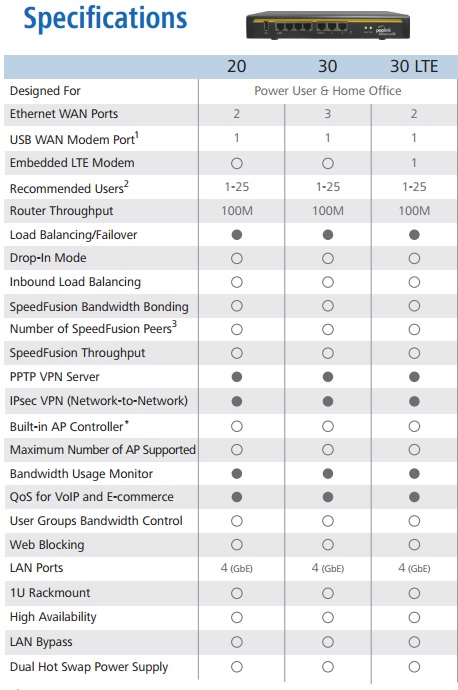
The Balance 50 features our advanced load balancing and failover. It supports PepVPN, so it can act as a SpeedFusion endpoint for branch VPN networking. Plus, it offers everything else customers love about the Balance 20/30. And the Balance 50 delivers speed and reliability to spare, even when individual connections slow down or drop out.
Download the datasheet for more information on the Peplink Balance 50 multi-WAN router. For pricing details and to stock up today, visit the online cart.
Sophos President and CEO Kris Hagerman said, “Sophos is thrilled to join the many other technology leaders that call Silicon Valley home. A meaningful presence in Silicon Valley gives us a golden opportunity to capitalize on the technology trends and partnership opportunities that are so abundant in this area. Silicon Valley is a renowned global center for the disruptive innovation, top talent and strategic relationships that will help propel Sophos to the next level.”
Mike Valentine, senior vice president of worldwide sales and channel, said, “Sophos is a global company with global reach. Given our ‘Channel First’ sales strategy, it’s important that we have a strong physical presence in the areas that will drive the greatest opportunities. This is why we’ve expanded to the Bay Area, adding it to the other 40 offices we maintain around the world. Sophos is building a market-leading channel program, constantly recruiting and enabling top-notch partners to join our team. This new office provides more evidence of our growing investment in the North America IT security market.”
Meanwhile, the Sophos product development engine continues to hum. The company recently announced Sophos Cloud, an easy to deploy and simple to manage cloud-based service for endpoint protection. The latest version of Sophos Mobile Control delivers best-in-class mobile device management (MDM), enabling organizations of all sizes to use mobile devices such as iPhone, iPad, Android and Windows Phones, to get work done – simply, securely and reliably.
The company also continues to attract top industry talent, including John Keenan as vice president of North America Sales, Mary Winfield as senior vice president of Support, and Dan Schiappa as senior vice president and general manager of the Sophos End User Security Group.
You can read the original article here.
Jan
We began producing antivirus and encryption products nearly 30 years ago. Today our products help secure the networks used by 100 million people in 150 countries and 100,000 businesses. Our products allow you to secure every end point of your network, from laptops to virtual desktops and servers, to web and email traffic and mobile devices.
All devices —managed easily through the cloud. What’s more, securing these devices is made possible through products that fit your precise needs. We ensure your network’s security by providing the one thing no one else can: Simplicity – arching the following three important IT security sections:
Network Protection
Who Needs This
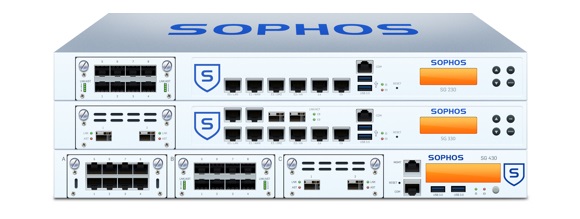
Sophos UTM helps you consolidate your security without compromising its effectiveness. It’s security made simple, protecting your users everywhere while making security easier to deploy and manage.
What’s Protected
- All computers, mobile devices and servers on a network
- Branch offices and remote users connected with VPN
- Email and web servers and even Wi-Fi users
Products
- Unified Threat Management – The ultimate network security package.
- Secure VPN – Turn any location into a secure location.
- Secure Web Gateway – Complete web protection everywhere.
- Web Application Firewall – Uncommon protection from common threats.
- Next-Generation Firewall – This is where network threats go to die.
- Secure Wi-Fi – Super secure, super Wi-Fi.
- Secure Email Gateway – Simple protection for a complex problem.
Enduser Protection
Who Needs This
Our endpoint protection will keep data in and malware out—all within your antivirus budget. And we protect your mobile devices and servers.
What’s Protected
- All computers, mobile devices, and servers on a network.
- Encryption for devices and file shares.
- Mobile devices and laptops on the go.
Products
- Enduser Protection Suites – The all-in-one security suite.
- Mobile Control – Countless devices, one solution.
- Endpoint Antivirus – Essential protection for laptops & desktops.
- SafeGuard Encryption – Encryption everywhere.
Server Protection
Who Needs This
Our antivirus protection delivers more effective, faster protection across your network of physical or virtual servers.
What’s Protected
- Broad platform support for Windows, UNIX and Linux servers.
- Small memory footprint won’t slow you down. Our antivirus agent has low performance impact, and is optimized for virtualization.
- HIPS protection for Windows is easy to deploy and manage.
Products
- Server Security – Pro-server. Anti-virus.
- Network Storage Antivirus – High-tech security for high-tech storage.
- PureMessage – Good news for you. Bad news for spam.