




















Sophos announced the release of Sophos Cloud Server Protection, a high performance malware protection solution designed specifically for servers. The solution expands Sophos Cloud to a comprehensive security platform designed to protect desktops, laptops, mobile phones, tablets and now servers with the most effective and simplest to manage business security offering available. Servers store large amounts of sensitive information and have become popular targets for cybercriminals. To secure servers, administrators have traditionally had to choose between desktop-oriented security software and complex, expensive server-specific security tools. Perhaps this is why two thirds of the IT professionals surveyed on Spiceworks identified the complexity of learning, configuring and maintaining server security software as an “important” or “very important” concern.
The new Sophos Cloud Server Protection solution delivers malware protection, host intrusion prevention and web security, as well as clear visibility into the current security status of all managed servers via a simple web-based interface. The new offering from Sophos is also the only server security product that can continually monitor the server environment, detect new applications on an ongoing basis and intelligently adjust policies to maintain operational efficiency.
“If compromising desktops is like stealing a wallet, then hacking a server is like robbing a bank,” said Bill Lucchini, SVP & GM for Sophos Cloud. “Today’s businesses need the most up-to-date protection, and Sophos Cloud Server Protection gives overtaxed IT personnel an innovative, high performance and simple to manage solution for securing server environments.”

“As part of the recent Sophos Cloud beta program, I was able to preview the Server Protection functionality added into the product,” said Scott Hartung, IT Director, The Rivett Group . “We currently use Sophos Cloud to protect our Windows, Mac, and mobile devices. I like the fact that Sophos truly understands server security, and I can see that this new version of Sophos Cloud will help me reduce the time spent on maintaining server security.”
“We are finding that more of our customers are trying to support a geographically diverse workforce,” said Pete Greco, VP of Sales and Technology, Productive Corporation. “Sophos Cloud with Server Protection provides comprehensive visibility and manageability, regardless of where employees and their devices are located. With Sophos, we are certain our clients’ workforce is both secure and available.” Watch a video about Sophos Cloud Server Protection and sign up for your 30-day trial right now.



Every quarter Sophos announces the SPAMPIONSHIP league highlighting the worst offending countries for spam. As we approach Halloween, the Q3 (July-August-September) results for 2014 are in. The Spampionship is a clear reminder that while spam is a global problem, prevention begins at home. That’s because most spam comes from so-called “zombies” – computers infected by malware that puts them under the remote control of cybercrooks who could be on the other side of the world, and probably are.
For example, SophosLabs has clocked a single infected computer sending more than 5,000,000 spams in a single week, illegally promoting an ever-changing cocktail of shady products and services, and pumping out malware in attachments.
And as SophosLabs monitor where spam comes from, they are also simultaneously mapping out where in the world the zombies are. As Cybersecurity Awareness Month draws to a close, it’s time to be part of the solution, and go zombie bashing with Sophos!
Just download and run Sophos’ free Virus Removal Tool to check your computer isn’t infected, and do your bit today!
In this Sophos Naked Security article, Sophos expert Paul Ducklin provides his analysis of the latest Spampionship results.
Highlights of the Q3 2014 Spampionship
Being high on the spam-sending charts, means you’re also high on the scale of people who put their personal information, finances, and even identity at risk.
The Spampionship is the league that everyone wants to lose, and below are the results for Q3 (July, August, September) of 2014.
The “Dirty Dozen” countries

Measuring spam entirely by volume-per-country is a little unfair, because populous countries like China, or very well-connected, like the USA, inevitably bubble up to the top of the list.
Things get fairer – and more interesting – when each country’s spam volume is divided by its approximate population:

Read the original article, here.

Back in the summer we ran a little survey on SpiceWorks and almost 400 Small and Medium Business IT managers gave us their view on the main challenges they have with their current firewall. But some of the results weren’t exactly what we were expecting.
The #1 rated issue was the lack of reporting options
 35% of respondents said their firewall provides insufficient reporting and 22% also cited lack of visibility into infected machines which speaks to a lack of useful insight too. Users are hungry for bandwidth and regulatory compliance is Insufficient reporting becoming increasingly important so it’s not really surprising that IT managers crave a better view into what’s happening on their network.
What is surprising is that so few firewall vendors offer their users what they need. Compare the leading UTM/Firewall vendors and you’ll find just one who has over 1000 reports available built-into the appliance. I’ m sure you can guess who check here if you can’t!
At Sophos we prioritize reporting and in addition to the on-box reports we also offer Sophos iView our dedicated virtual reporting appliance for those that simply need more reports or want to correlate reporting across multiple appliances.
Complexity is still the enemy of security
 We all know IT threats are coNot easy to managemplex and the survey confirms that all too often the products designed to solve security problems are far too complex too.
Ease of use only narrowly misses out on top spot with 34% saying its a frustration.
Adminstrators need a strong link between seeing what is happening and doing something about it. This is essential in security products where a weakness at one point on the network can quickly become a problem for the entire organization.
Advanced threats? We’re covered, at least we think we are!
 Other surprising results were hreportingow few people cited lack of protection against advanced threats and poor performance as weaknesses. We hear a lot about how traditional firewall and antivirus technologies can no longer protect against sophisticated Advanced Persistent Threats. This is seemingly a non-issue for 90% of those surveyed.
IT managers are either confident their firewalls have the necessary protection place, like command and control detection and sandboxing, or simply have more pressing needs and don’t see advanced threats as their concern but for governments and larger enterprises to worry about.
Performance matters or does it?
 That performance rates so lowpoor perf is possibly the biggest surprise. Performance is often a key concern for buyers when selecting a firewall with technical data, sizing guides and comparative reports providing useful guidance for buyers to select the right firewall for their needs. This result suggests the guidance and advice of channel resellers is proving effective and buyers are right-sizing their firewalls.
All in all some interesting results that suggest reporting and ease of management should be carefully looked at when selecting a replacement firewall. But maybe this is not really that surprising after all as these areas do reflect the core focus of network security managers. Without visibility into what’s happening, or the ability to quickly put protection in place an IT Manager’s life becomes very difficult.
Sophos UTM – ease of use and on-box reporting as standard
Sophos UTM is designed to be easy to use and includes extensive on-box reporting as standard – no need for additional hardware or subscriptions. Our new SG Series appliance all include a hard drive or a solid-state disk, giving you comprehensive reporting that you can access in seconds. So you can see what’s happening on your network in real-time and quickly access historical data.
Watch this short video to see it in action. On-box reporting as standard is just one of the reasons to make your next firewall a Sophos firewall.
Read the original article, here.

Dropbox usernames and passwords were leaked online this week. It’s the latest in a string of recent data breaches involving compromises of third-party websites that take advantage of password re-use to get at users’ accounts on multiple services. In 2014 alone, millions have had their private information and passwords compromised, leading to what some are calling data breach “fatigue.” Dropbox was quick to respond, denying a breach on their end while urging their users to enable tighter password security measures. Dropbox’s response was refreshing when compared to that of other major brands, such as Home Depot, which chose to communicate very little with the public, distributing only a few carefully crafted press releases.
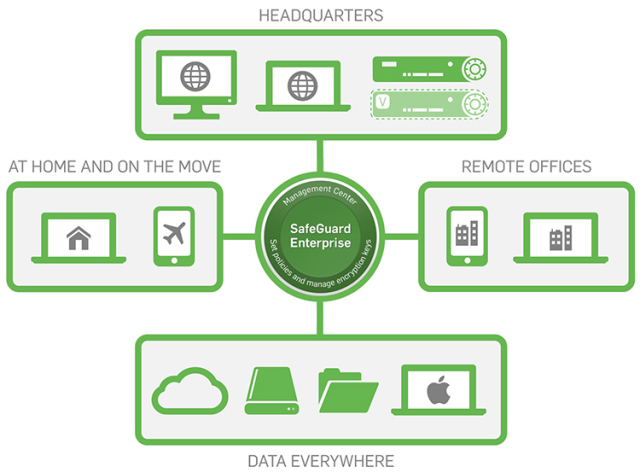
As businesses learn to navigate their way through crisis management in the digital age, there are solutions that can mitigate risk, greatly saving these companies both dollar value and reputation value. Sophos offers a complete suite of solutions to ensure your customers’ data is safe and secure. A major component of this is our SafeGuard Encryption solution. Simply put, encryption adds the crucial layer of security in situations where a customer’s data is breached. Even if a bad guy gets hold of a user’s data, it’s utterly useless when encrypted, whether that data is at rest or in motion (e.g, being uploaded/downloaded from the cloud).
Although this breach was not due to a compromise of Dropbox itself, are you confident that your important files are safe when stored in the public cloud? In the case of cloud storage services, of which Dropbox is one of many, encryption prevents any breach, regardless of who caused it, from resulting in the loss or exposure of data. Using an encryption solution where the keys and control mechanisms are stored far from the potential points of compromise means you can control how data is stored, and manage who has access.
Learn more about SafeGuard Encryption
Sophos SafeGuard Encryption solves the major challenge of managing encryption across multiple platforms, devices, and cloud environments. Users and IT staff can share data safely between Windows, Mac and mobile devices – securing data wherever it lives and wherever it is sent. For more information about SafeGuard Encryption, get our free whitepaper Managing BitLocker With SafeGuard Enterprise (registration required).
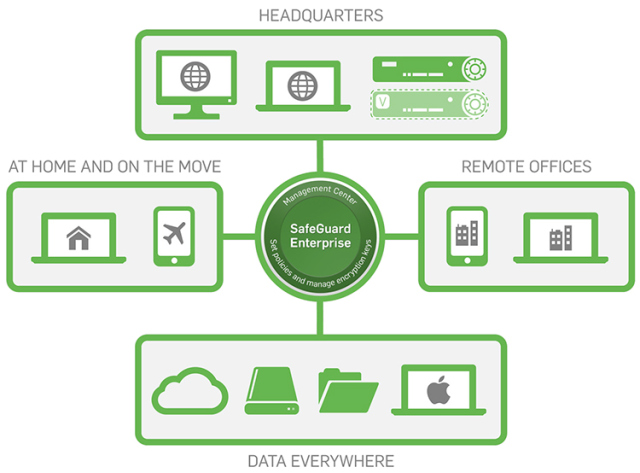
Or download our Encryption Buyers Guide to learn more about how to choose the best encryption solution for your needs. You can also read interesting articles about SafeGuard Encryption, here and here.
Read the original article, here.

Sophos announced additions to its range of SG Series firewall/UTM appliances, WiFi access points, and the availability of Sophos iView, a new dedicated virtual reporting appliance. By extending its Network Security portfolio with new entry-level and enterprise class appliances, Sophos now provides businesses of any size and the channel partners that serve them with the flexibility to consolidate their security with a complete proven solution set.
Sophos SG Series Appliances
In April 2014 Sophos released the first of its new generation of network security appliances, the Sophos SG Series. Today, Sophos announced six additional firewall appliances, meaning that Sophos customers and partners can now choose from 12 SG Series models. As with the existing models, each uses the latest Intel multi-core technology to provide optimal performance. The new appliances include four desktop models ideal for small office deployments and two new 2U models that utilize the fastest Intel Chips and deliver extensive redundancy and customization features. Further desktop models will be available later in the year with integrated wireless connectivity, including two which support the 802.11ac standard.

Sophos iView
The release of the Sophos iView virtual appliance addresses what a recent Sophos survey on Spiceworks of SMB IT managers identified as their most significant frustration with existing firewalls from any vendor – insufficient reporting. This was the number one complaint with 35 percent of respondents saying they’d like greater reporting options. With over 1,000 built-in reports, including regulatory compliance reports, Sophos iView will give IT managers the extra depth they need. Users can also build their own custom reports and dashboards, focusing on problem areas or users on their network. Available as a virtual appliance only, Sophos iView supports VMware, Hyper-V, Citrix, and KVM virtual environments.
As a dedicated reporting appliance, Sophos iView can offload reporting duties and provide a range of added capabilities such as:
- Compliance reporting for industry standard regulations such as HIPAA, PCI, SOX, and GLBA
- Consolidated reporting across multiple UTM firewalls for a complete view of all network traffic from a single console
- Long-term persistent log management and storage for security and backup with convenient access for audits or forensics
- Licensing that is based on storage requirements, with the entry level vSI-Light including 100GB of storage and the vSI-Unlimited

Wireless Access Points
In addition to the SG Series and iView appliances, Sophos also announced the AP 100, the first in a new generation of wireless access points that support the latest 802.11ac protocols, and an entry level access point, the AP 15. As with previous Sophos wireless access points, the new AP15 and AP100 models can be managed directly from the Sophos SG Series appliances, meaning the wireless network is tightly integrated with the firewall protection.

You can read the original article here.

Sophos announced that it has acquired cloud-based security firm Mojave Networks of San Mateo, Calif. This acquisition will strengthen Sophos cloud-managed and appliance-based security solutions. To Sophos Cloud, an integrated cloud-managed security offering, Mojave will add a rich cloud-based web security solution. And to Sophos’ line of network security hardware it will enable hybrid deployment options (SaaS and non-SaaS) to meet diverse web security needs. An increasingly mobile workforce and an explosion of mobile devices have created a serious challenge for IT. To safeguard valuable corporate data and to secure roaming devices, Mojave’s innovative security platform provides an effective cloud-based network security solution that is easy to deploy and manage. It will allow Sophos customers to benefit by providing:
- A cloud-based web filtering engine enabling full protection for web interactions without requiring additional on-site technology
- Near instantaneous protection from emerging threats by supplying real-time threat intelligence from the cloud
- A simple and intuitive management experience designed for small and mid-market enterprises or pragmatic enterprises of any size
- A zero-compromise approach to security across Windows, Mac, iOS, and Android devices, delivering context-awareness, visibility and seamless protection whether they are on or off the corporate network
“Mojave Networks is a young innovative company that has built a leading platform right at the intersection of three cutting-edge areas of security: cloud, web security, and mobile,” said Kris Hagerman, CEO, Sophos. “We’re dedicated to delivering security that is both powerful and comprehensive, but also simple. By integrating Mojave Networks’ technology into Sophos Cloud, we’re extending our leadership position and enhancing an offering that is already one of the fastest growing products in Sophos’ history.”
“We are proud of the work we’ve done at Mojave to pioneer a cloud-based approach to mobile and web security that offers unrivaled protection from malicious threats, security for mobile workers, and uniform policies across platforms,” said Garrett Larsson, CEO of Mojave Networks. “As part of Sophos we can continue to pursue our vision of comprehensive security for a mobile workforce at an accelerated pace, as we take full advantage of the rapid growth of Sophos Cloud, Sophos’ world-class community of more than 15,000 partners, and Sophos’ global presence. We’re excited to join such an innovative and disruptive leader in the IT security space.”

Sophos plans to integrate Mojave Networks’ technology into its fast-growing Sophos Cloud product line in early 2015 and then later in 2015 into appliance-based network security solutions. This will allow Sophos partners to offer their customers an integrated security platform that brings together best-of-breed PC, Mac, mobile, and network protection abilities through a single cloud-based console. This represents another leap forward in delivering comprehensive protection to organizations seeking enterprise-class security without enterprise-class complexity.
You can read theoriginal article here.

InfoCom World Congress is the largest event on digital technologies in SE Europe, attracting more than 3,500 delegates per year. It successfully records and captures for many years to run the course taken and convergence happening in Technology, Informatics, Telecommunications & Media sectors. The 16th InfoCom World titled «Techonomy: Time for Synergies!» will take place on October 21, 2014 at Divani Caravel Hotel. This year’s conference takes place in a period when special emphasis is given to technology, business strategies and synergies that are now unanimously recognized as a driver for growth.
NSS could not be absent so is one of the Sponsors of the conference. Come to chat with us !!

A lot has changed since 1995, the last time a major European law was passed on the subject of data protection (the Data Protection Directive 95/46/EC). For example, mobile devices are ubiquitous, and it’s not unusual to carry two or even three at a time. Meanwhile, sensitive company data is moving outside the safety of the traditional corporate security perimeter. Employees email documents to themselves, access data from personal smartphones and tablets, and store data in the cloud. Major data breaches are commonplace today, putting customers at risk of identity theft and financial loss, and businesses at risk of losing customer and investor loyalty. European businesses are not prepared to meet regulatory requirements outlined in the EU Data Protection Regulation, due to be enacted by the EU parliament in 2015. That’s the story told by a survey of 1,500 office workers in the UK, France and Germany, conducted by Sophos. Although a large majority of poll respondents (84%) agree that stricter data protection requirements are needed, most lack confidence that their employers are compliant (77%), and many do not know what type of data protection their companies currently have in place.
During a roundtable discussion about the survey, our security experts talked about the current state of data protection and how the new requirements might impact businesses. Anthony Merry, director of product management in the data protection group at Sophos, said companies have to get a better understanding of not just what regulations require, but what data protection actually is. “Many of the companies I talk to still do not understand what data protection is, why businesses need to do it and why it is important, and that needs to change,” he said, according to ComputerWeekly.
Some of the proposed changes to the EU Data Protection Directive include huge fines for non-compliant companies in the event of a data breach — as much as 5% of global turnover, or €100m, whichever is higher. Compared to relatively lax data protection laws in the United States, such punitive laws could be seen as harmful to businesses.
However, if companies are encrypting their data — on disks, mobile devices, storage drives, and in the cloud — they don’t have to worry as much. “If data is encrypted, even if IT systems are breached, companies will not be liable under the law,” Anthony said. Unfortunately, businesses in the countries we surveyed have a long way to go to complete data protection. According to our survey, only 62% of UK companies are encrypting laptops, along with 36% in France and 56% in Germany. Encryption of mobile devices is even farther behind: 41% in the UK, compared to 21% in France and 32% in Germany.

Learn more about data protection
Sophos SafeGuard Encryption solves the major challenge of managing encryption across multiple platforms, devices, and cloud environments. Users and IT staff can share data safely between Windows, Mac and mobile devices – securing data wherever it lives and wherever it is sent. For more information about SafeGuard Encryption, get our free whitepaper Managing BitLocker With SafeGuard Enterprise (registration required). Or download our Encryption Buyers Guide to learn more about how to choose the best encryption solution for your needs.

Syrian Eagle told Mashable that Microsoft deserves what it got because it’s hawking data to US snoops and multiple governments. The SEA will publish proof of the allegations, Syrian Eagle said: “Microsoft is monitoring emails accounts and selling the data for the American intelligence and other governments. And we will publish more details and documents that prove it. Microsoft is not our enemy but what they are doing affected the SEA.”
On Saturday, the pro-Assad group took over the @MSFTnews and @XboxSupport Twitter accounts and posted various messages hashtagged “SEA”, according to Mashable. One read: “Don’t use Microsoft emails (Hotmail, outlook), They are monitoring your accounts and selling the data to the governments.” The takeovers appear to have been brief: the messages are no longer live, and a Microsoft spokesperson sent this statement to The Register: “Microsoft is aware of targeted cyberattacks that temporarily affected the Xbox Support and Microsoft News Twitter accounts. The accounts were quickly reset and we can confirm that no customer information was compromised.”

The attackers also Tweeted a screenshot of what appears to be a takeover of The Official Microsoft Blog at blogs.technet.com. Microsoft didn’t put out a statement about the alleged attack, but Mashable says its reporters saw it in action and confirmed that it lasted about an hour. Mashable also posted a screenshot showing multiple “Syrian Army Was Here” messages on the defaced site.

Others reported that the blog was either forcing a redirect to the SEA’s site or displaying the defaced blog. At any rate, the blog is now under the company’s control. Microsoft responded to the SEA charges about monitoring email by sending this statement to Mashable: “We’re actively investigating issues and are focused on protecting our employees and corporate network. Microsoft is sometimes obligated to comply with legal orders from governments around the world and provides customer data only in response to specific, targeted, legal demands”.
You can read the original article here.
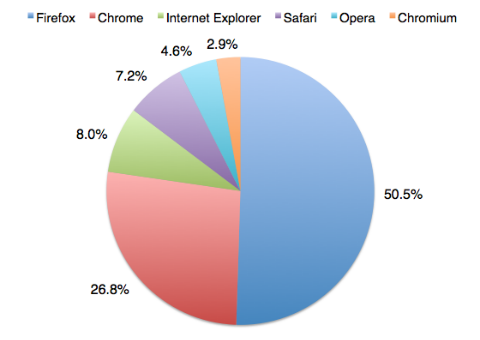
Our poll offered readers the chance to vote for one of the six most popular web browsers – Chrome, Firefox, Internet Explorer, Opera, Safari and Chromium – and asked which you trusted the most. Mozilla’s Firefox, the linear descendant of both Netscape Navigator and the original ‘graphical web browser’ the NCSA Mosaic, was a runaway winner. Firefox accrued almost double the number of votes of its nearest rival, Google Chrome, and more than six times the votes awarded to perennial rival and fellow ‘browser wars’ veteran Internet Explorer.
The results are even more emphatic when you consider how many people actually use each browser. Below is a table that compares the number of votes each browser received in the poll against the number of unique article pageviews from each of those browsers over the same period.
Results are ranked in order of conversion rate – the rate at which page views by a given browser correlate with votes for that browser (Chrome and Chromium identify themselves in the same way and we can’t separate their unique page views so their results are combined in this table).

Top of the table is Opera which was the only browser that scored more votes for trustworthiness than it had users, although it did so with much smaller totals than its competitors. You could probably sum up the entire history of the Opera browser with the phrase “small but loyal following” and despite the regard in which its users hold it Opera seems destined to remain the perennial bridesmaid of the browser world. The poor showing of Internet Explorer is notable but perhaps not surprising given that it is often imposed on users as a matter of corporate policy. What stands out at me is the difference between the Mozilla and Google products. Both browsers are well established and well known open source projects, they both run on Windows, Mac and Linux and unlike Explorer or Safari neither come bundled with an operating system.

Perhaps Chrome users are more cynical or more realistic about where they place their trust. Or perhaps people who choose Chrome are also people who don’t vote in internet polls. We don’t know but I suspect, as the comments on our poll seem to suggest, that the reason for Chrome’s poor showing is that Google’s claim to Do No Evil is simply no longer convincing. The untrustworthiness of Google is a consistent theme across the most highly rated comments on the poll:
“frankly I trust Google the least, as they have too many data points for comparison.
I don’t trust Google as far as I could throw ’em. As a company, it’s entirely uninterested in my security or privacy, especially if it can make money by selling my personal information.
Trusting any software completely is a bit foolish, but anyone who actively trusts Chrome is a good subject for psychological study.”
You get the idea. Of course this is only an online poll and and not a scientific experiment so my conclusions should be taken with a liberal pinch of salt.
You can read the original article, here.